Wessel's Wise Words - March Edition : “Need more hydropower? Just make it more sour.”
And that is exactly what we did. By coating our nanoparticles with Citric acid, we are making our nanoparticles more hydrophilic. The figure below shows a UV-vis transmittance spectrum at 900 nm. When the nanoparticles are dispersed in solution, in this case deionised water, the nanoparticles absorb and scatter the light and resulting in a low transmission. Over time the nanoparticles tend to agglomerate and sink to the bottom and therefore increasing the transmittance.
This measurement shows that uncoated particles agglomerate much faster (900 seconds ~ 15 minutes) in deionised water compared to the citric acid coated ones (7200 seconds ~ 2 hours).
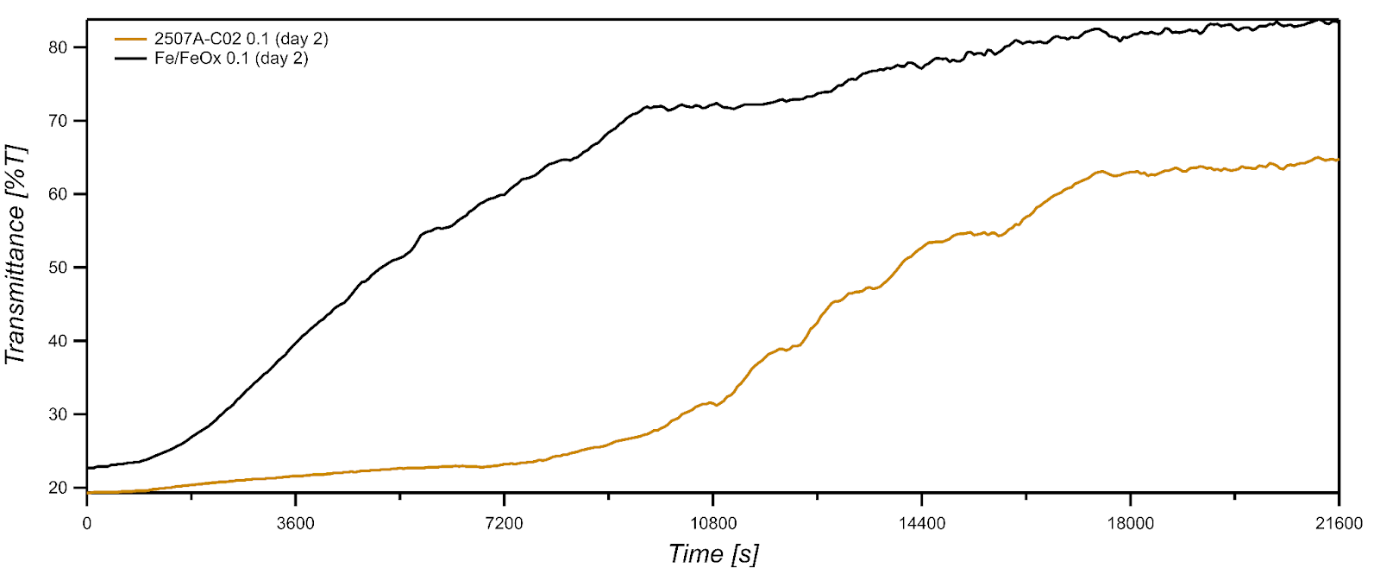
Figure 1: transmittance @900 nm, measured over time for Fe/FeOx (black) and Fe/FeOx@CA in DI water.
Is your company looking for super hydrophilic nanoparticles? Reach out and let us show that small things can have big impacts.
Soon available on the website!